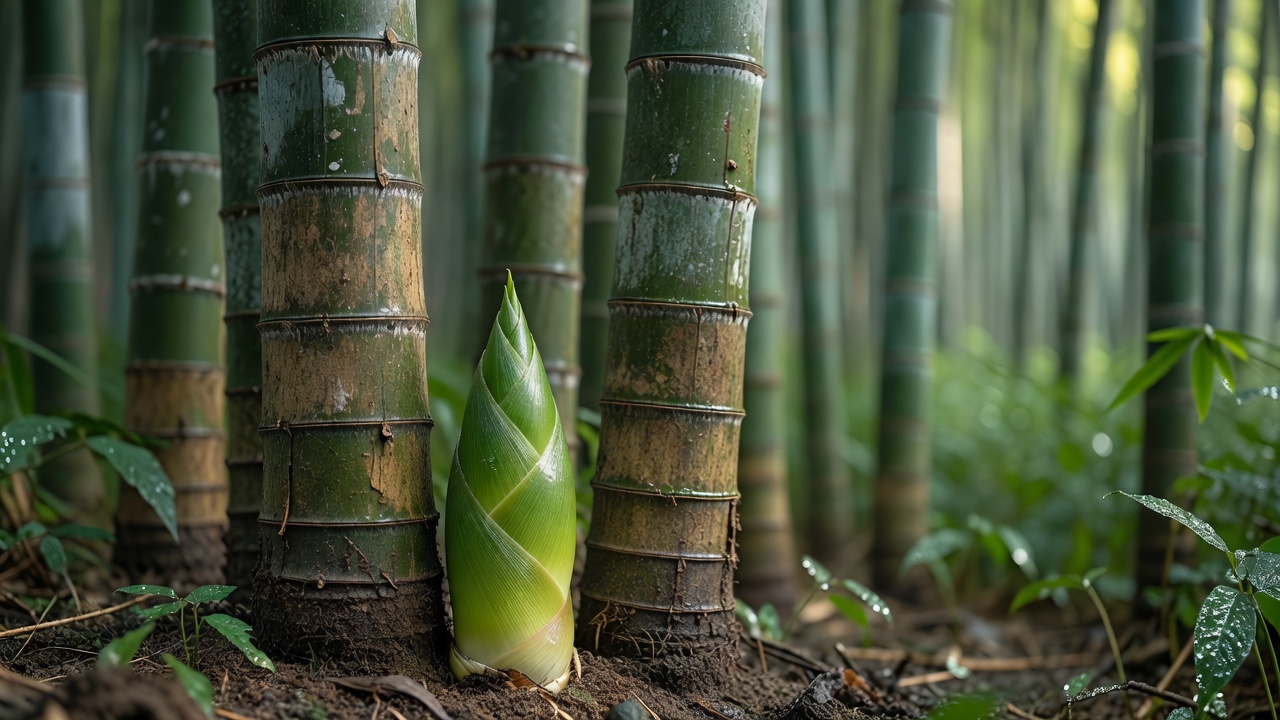
The grove and how it is managed
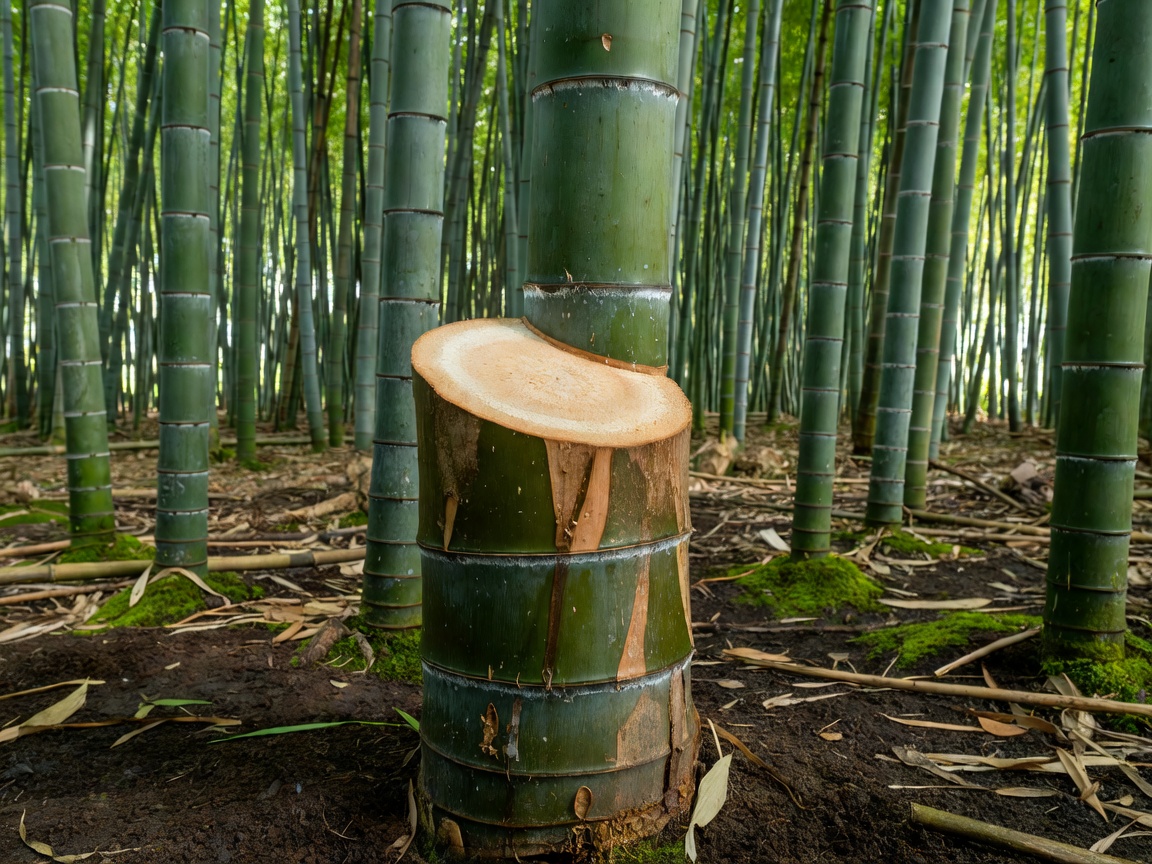
Many bamboo species regenerate from an underground rhizome system, so selective harvesting of mature culms need not require replanting. This is a genuine advantage over materials from single-harvest plantations. It holds only when groves are managed responsibly: harvesting the right culms, protecting soil and avoiding the conversion of natural forest to monoculture.
Some bamboo is certified under schemes such as the Forest Stewardship Council (FSC), and the International Bamboo and Rattan Organisation (INBAR) publishes research on resource management. Where certification is unavailable, ask suppliers directly how culms were selected and harvested.
What the photograph does not show
A bamboo pavilion is rarely all bamboo. Its environmental profile is shared with the materials and processes that make it work:
- Transport: bulky, hollow culms ship inefficiently over long distances.
- Treatment: preservatives, energy for drying and handling of residues.
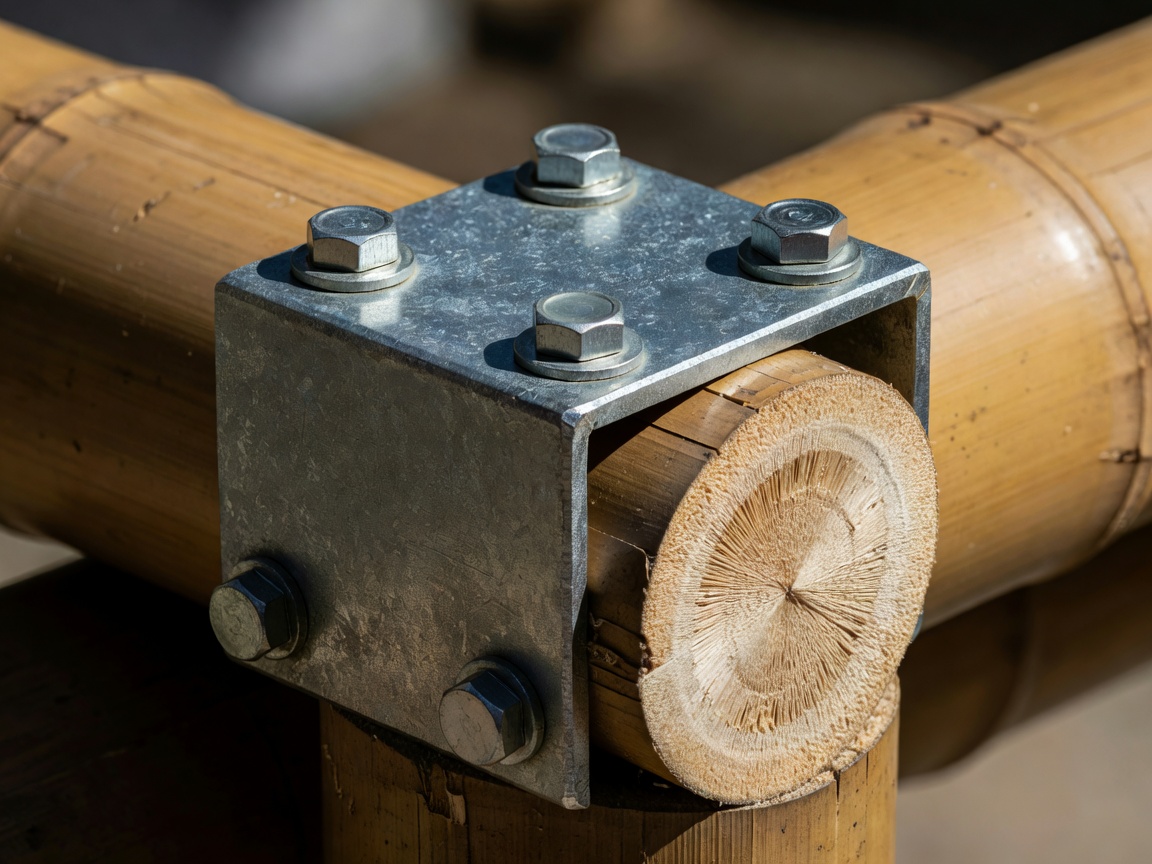
- Connectors: steel bolts, plates and mortar fill add embodied impact.
- Foundations: concrete plinths and footings can be significant.
- Roofing: thatch, shingles or membranes each have their own lifecycle.
Credible comparisons come from life cycle assessment (LCA) following recognised methods such as ISO 14040 and ISO 14044, using data specific to the product and region.
Why we avoid easy numbers
Bamboo absorbs carbon as it grows, and some of that carbon stays stored in the building while it stands. How much, and for how long, depends on species, grove management, product processing, service life and what happens at the end. Published figures vary widely and are frequently quoted out of context. We prefer to describe the mechanisms and point readers toward project-specific assessment rather than repeat headline claims.
Durability vs. treatment
Untreated bamboo avoids chemicals but may need replacing quickly. A longer service life often justifies careful treatment.
Capacity vs. steel
Bolted and plated joints span further but rely on metal. Smaller spans with lashing may use less, at the cost of maintenance.
Local vs. ideal
A local species with lower tested strength may still outperform an imported one once transport is counted.
Designing for change and disassembly
Pavilions are often temporary or seasonal. Bolted and lashed joints can be undone, so members may be reused, repaired or replaced individually. Mortar-filled or glued joints are harder to separate. Planning access to joints, labelling modules and recording member positions helps a structure outlive its first site.
Untreated bamboo can biodegrade; treated bamboo and composite elements need appropriate disposal according to local rules. Designing with this in mind is part of the material story.
Before calling a pavilion sustainable
- Origin and management of the bamboo documented
- Transport distance and mode estimated
- Treatment method and chemicals identified
- Steel, concrete and roofing quantities listed
- Expected service life and maintenance planned
- Disassembly and end-of-life route described
- Claims backed by a project-specific assessment
A measured position
Bamboo can be part of a lower-impact architecture when it is sourced well, protected by design, connected thoughtfully and kept in service for a long time. None of that is automatic. Treat the material as an opportunity that needs evidence, not as a guarantee.